
Living in arid climates or during dry spells can present a number of challenges, including sinus issues, dry skin, and even cracking of wooden furniture. To combat these issues and maintain a comfortable indoor environment, many homeowners turn to whole-house humidifiers. Unlike portable humidifiers, which only provide moisture to a single room, whole-house humidifiers are integrated into the home’s HVAC system and work to distribute humidity throughout the entire house. There are several types of whole-house humidifiers available, and in this article, we will specifically explore the differences between power and bypass humidifiers, as well as their pros and cons.
Key Differences between Power and Bypass Humidifiers

When it comes to choosing a whole-house humidifier, one of the key decisions homeowners need to make is between power and bypass humidifiers. Both options have their own strengths and weaknesses, which we will explore in detail. However, it is important to understand the main differences between the two types of humidifiers before making a decision.
1. Operation: Power humidifiers are equipped with a fan that helps propel moisture into the air ducts, while bypass humidifiers rely on the airflow from the furnace to distribute moisture throughout the house.


2. Noise: Bypass humidifiers are generally quieter than power humidifiers due to their reliance on the furnace’s airflow.
3. Cost: Bypass humidifiers are generally less expensive to purchase and operate compared to power humidifiers.
4. Maintenance: Power humidifiers typically require more frequent maintenance, including replacing filters and cleaning the fan, while bypass humidifiers have fewer components to maintain.
Now that we have a general understanding of the key differences between power and bypass humidifiers, let’s dive deeper into the pros and cons of each type.
Pros and Cons of Power Humidifiers
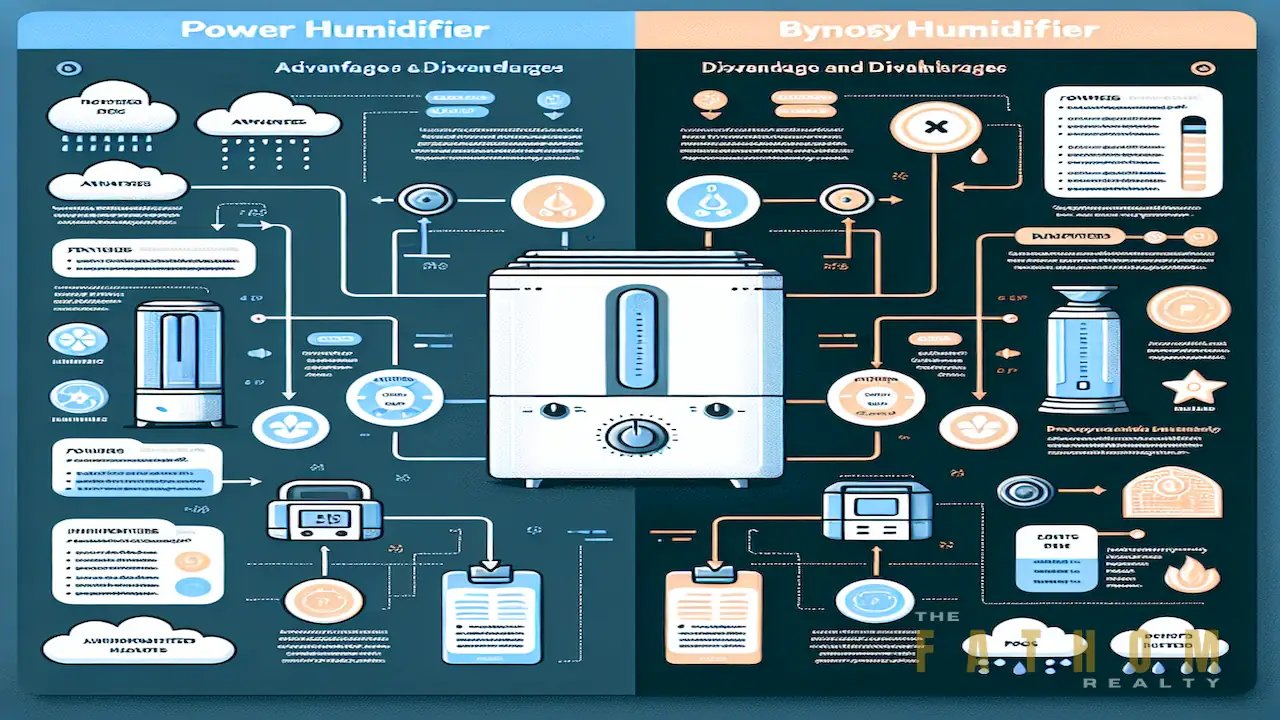
Power humidifiers, also known as fan-powered humidifiers, are popular choices for homeowners looking to achieve optimal humidity levels in their homes. These humidifiers come with their own built-in fans, which helps to distribute moisture more effectively throughout the house. Here are some key pros and cons of power humidifiers:
Pros:
- Efficiency: Power humidifiers are known for their efficient operation and can quickly increase humidity levels in a home.
- Coverage: Power humidifiers are suitable for larger homes as they can effectively distribute moisture to multiple rooms.
- Control: Many power humidifiers come with built-in controls that allow homeowners to adjust the humidity levels according to their preferences.
Cons:
- Noise: The built-in fan in power humidifiers can generate noise, which may be a concern for some homeowners.
- Cost: Power humidifiers are generally more expensive to purchase and operate compared to bypass humidifiers.
- Maintenance: Power humidifiers require regular maintenance, including filter replacements and cleaning of the fan, to ensure optimal performance.
Power humidifiers are efficient and effective at distributing moisture throughout the home, but they come with a higher price tag and require more maintenance compared to bypass humidifiers.
Pros and Cons of Bypass Humidifiers
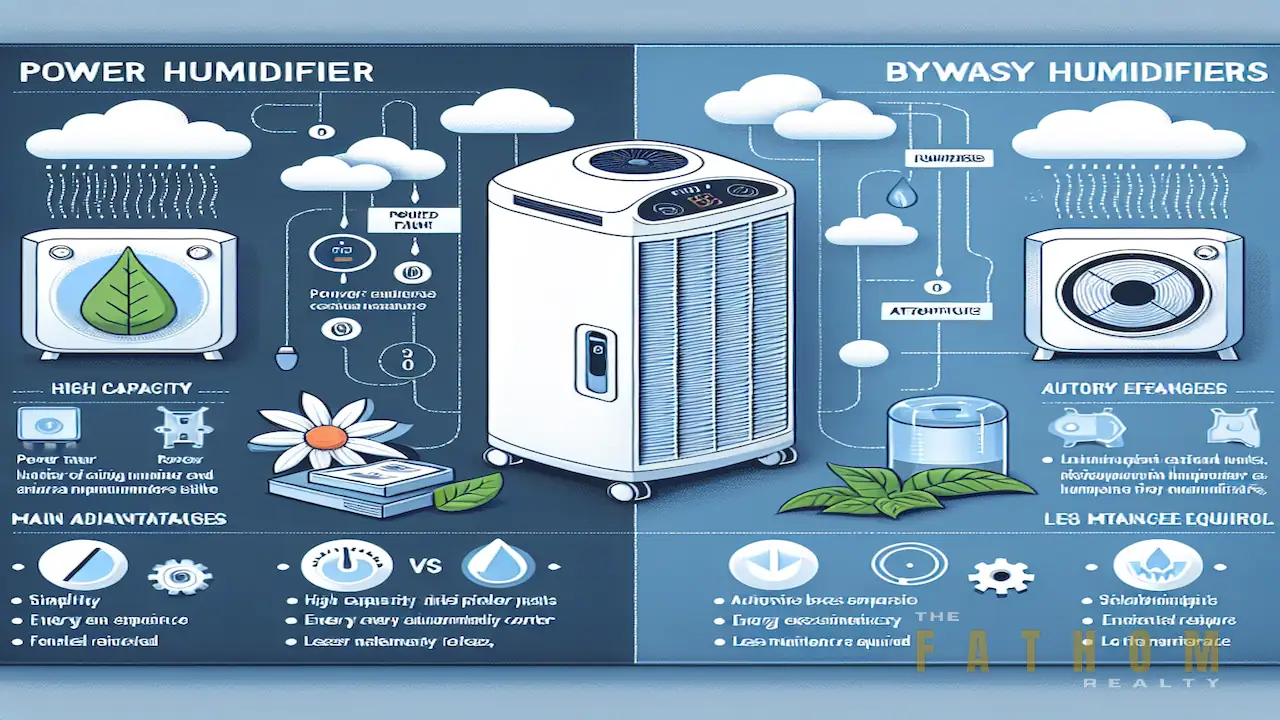
Bypass humidifiers, also known as evaporative or flow-through humidifiers, are another popular choice for homeowners. These humidifiers do not have a built-in fan and instead rely on the airflow from the furnace to distribute moisture. Let’s take a closer look at the pros and cons of bypass humidifiers:
Pros:
- Quiet Operation: Bypass humidifiers are known for their quiet operation since they do not have a built-in fan.
- Cost-Effective: Bypass humidifiers are generally less expensive to purchase and operate compared to power humidifiers.
- Low Maintenance: Bypass humidifiers have fewer components and therefore require less maintenance compared to power humidifiers.
Cons:
- Slower Results: Bypass humidifiers may take longer to reach the desired humidity levels compared to power humidifiers.
- Smaller Coverage: Bypass humidifiers may not be as effective in larger homes or multi-story houses.
Bypass humidifiers offer quiet and cost-effective humidification, with lower maintenance requirements. However, they may take longer to achieve the desired humidity levels and may not be as suitable for larger homes.

Choosing between a power humidifier and a bypass humidifier depends on several factors, including the size of your home, your budget, and your personal preferences. Power humidifiers offer efficient distribution of moisture and can cover larger areas, but they come with a higher price tag and require more maintenance. On the other hand, bypass humidifiers are cost-effective and quiet, but they may take longer to reach desired humidity levels and may not be as effective in large homes. It’s important to carefully consider your needs and consult with a professional HVAC technician before making a decision.
Ultimately, both power and bypass humidifiers can be effective in maintaining optimal humidity levels in your home. Whether you choose a power humidifier or a bypass humidifier, the most important thing is to ensure that your indoor humidity levels are within a comfortable range to promote better health and comfort for you and your family.
Video related to Differences between Power and Bypass Humidifiers: Pros and Cons

Mason’s blog reflects his commitment to personalized service in real estate. His passion for fostering meaningful connections extends beyond transactions, offering a glimpse into the human side of property dealings.
Related posts
 What are the pros and cons of bedroom ceiling fans
 Is 1960s Homes the Ultimate Home Buying Resource for ABR®
 Lot Size vs House Size: Does Lot Size Include House
 Pros and Cons of Vented vs Ventless Gas Fireplaces
 What are the best practices for Power of Attorney signings
 Is Power Washing Essential for Your Home
 Real Estate Power of Attorney: What You Need to Know
 Condominium vs Landominium: What Are the Key Differences
 Public or Private Neighborhoods: Road Upkeep Responsibility
 Responsibilities of Homeowners: 10 Key Duties to Remember
 Pros and Cons of Manufactured Stone Veneer: Is it worth it
 Determining Road Ownership: Public vs Private Streets

